
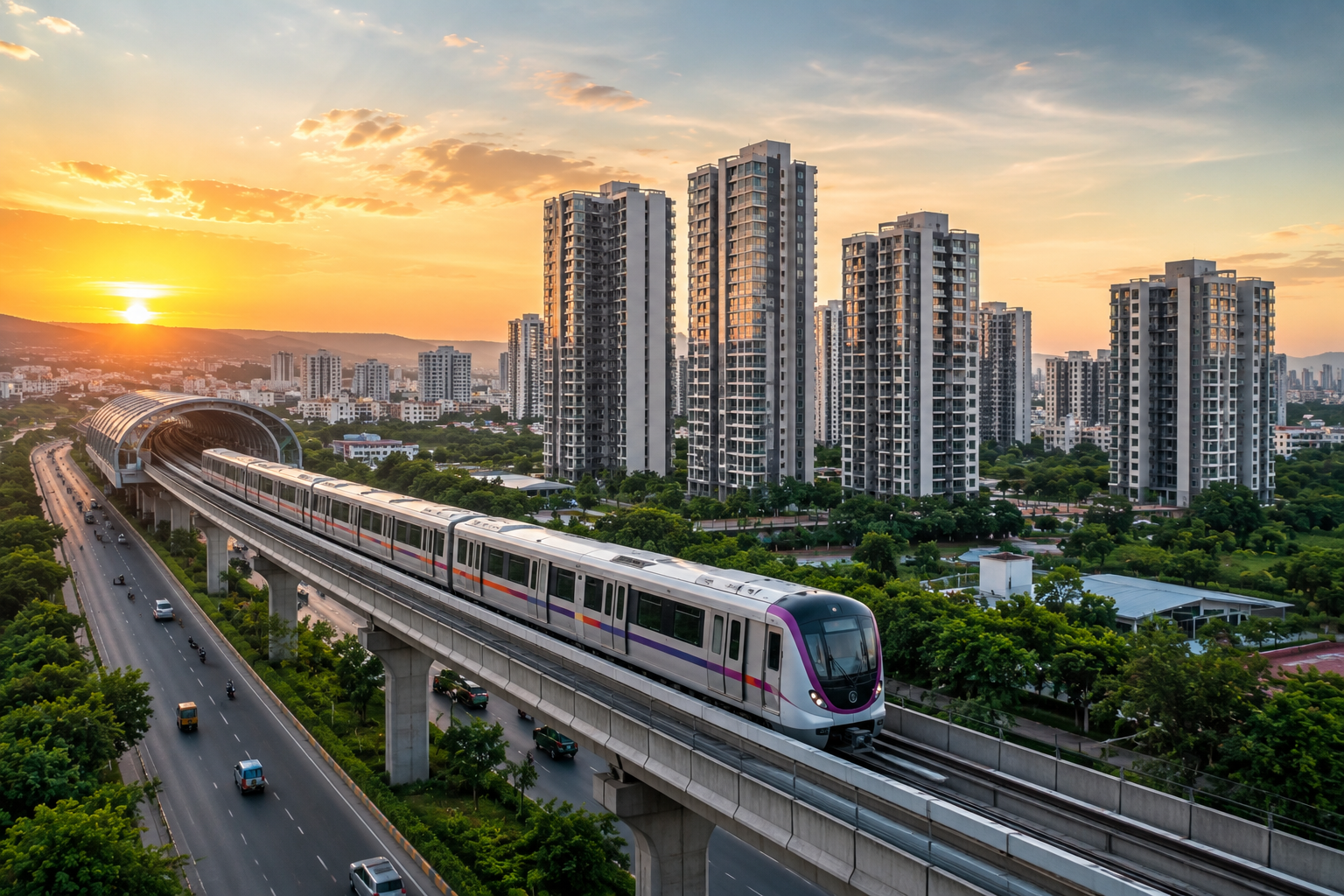
Infrastructure has always played a significant role in shaping the real estate market, and one of the biggest developments transforming real estate in Pune is the expansion of the Pune Metro. While improved connectivity makes daily commuting easier, it also has a direct influence on rental demand, property appreciation, and the overall attractiveness of residential locations.
For both homebuyers and investors looking to buy property in Pune, metro connectivity has become an important factor when evaluating a location. Areas that were once considered distant are now becoming well-connected residential hubs, creating new opportunities for investment and long-term growth.
Why Metro Connectivity Matters in Real Estate
Easy access to public transportation is one of the first things many homebuyers and tenants consider before choosing a home. Shorter commute times, reduced traffic congestion, and better connectivity to workplaces, educational institutions, and commercial centres significantly improve the overall quality of life.
As Pune continues to expand, the Metro network is helping bridge the gap between residential neighbourhoods and employment hubs. This has encouraged developers to launch new residential projects in Pune along metro corridors while increasing buyer interest in existing communities.
How Pune Metro Is Driving Rental Demand
Rental demand often follows infrastructure development, especially when it improves accessibility. The Pune Metro has made several residential locations more attractive for professionals, students, and families who prefer convenient commuting over long travel hours.
Properties located near metro stations generally experience:
- Higher tenant demand
- Reduced vacancy periods
- Better rental yields
- Increased interest from working professionals
- Improved long-term property value
As connectivity improves, tenants are often willing to pay a premium for homes that offer quicker access to offices and major commercial districts.
Localities Benefiting from Metro Connectivity
Several established and emerging locations are witnessing growing demand because of improved metro access.
Some of the key residential areas include:
- Baner
- Balewadi
- Wakad
- Hinjewadi (through planned connectivity)
- Pimpri-Chinchwad
- PCMC region
- Shivajinagar
- Vanaz
- Ramwadi
- Kharadi (future connectivity)
These locations continue to attract buyers looking for residential projects that combine modern amenities with excellent connectivity.
Why Investors Are Looking at Metro Corridors
For property investors, infrastructure often serves as an indicator of future appreciation. Metro corridors typically encourage commercial growth, improve accessibility, and increase demand for nearby housing.
Investing in properties near metro stations can offer several advantages:
- Strong rental demand
- Better occupancy rates
- Potential capital appreciation
- Increased resale value
- Long-term investment stability
Although investment returns depend on several market factors, properties with superior connectivity generally perform better than those in less accessible locations.
Metro Connectivity Is Changing Homebuyer Preferences
Today’s homebuyers are prioritising convenience alongside amenities. While features such as clubhouses, landscaped gardens, and recreational facilities remain important, easy access to public transport has become an equally valuable consideration.
Young professionals, families, and senior citizens increasingly prefer homes that reduce travel time and improve daily mobility. This shift in buyer behaviour has encouraged developers to focus on locations that offer seamless connectivity through roads, highways, and metro networks.
Pune’s Expanding Infrastructure Supports Long-Term Growth
The Pune Metro is part of a larger infrastructure transformation taking place across the city. Projects such as new flyovers, road widening initiatives, and the proposed Ring Road are collectively improving urban mobility and creating new residential growth corridors.
As these developments continue, several upcoming residential projects in Pune are expected to benefit from stronger buyer demand and improved investment potential.
For anyone planning to buy property in Pune, infrastructure developments should be considered alongside factors such as builder reputation, project quality, location, and future appreciation prospects.
Should You Invest Near a Metro Station?
Buying a home near a metro corridor can offer both lifestyle and financial benefits. Better connectivity often translates into easier commuting, stronger rental demand, and enhanced resale potential.
However, investors should also evaluate:
- Future infrastructure plans
- Social infrastructure such as schools and hospitals
- Employment hubs nearby
- Developer credibility
- Overall neighbourhood development
A well-connected property in a growing locality often provides better long-term value than focusing solely on current pricing.
Final Thoughts
The expansion of the Pune Metro is reshaping the city’s residential landscape by improving connectivity, enhancing rental demand, and opening new investment opportunities across multiple neighbourhood. As infrastructure continues to evolve, locations with metro access are likely to remain attractive for both end-users and investors seeking sustainable long-term growth.
Whether you’re exploring residential projects in Pune, planning a property investment, or looking to buy property in Pune, understanding how infrastructure influences the market can help you make more informed decisions.
For buyers who want to compare projects across different locations, platforms like MiCasa Homes provide access to verified residential projects in Pune from multiple developers. By bringing project information, pricing, amenities, and enquiry options together on a single platform, MiCasa Homes helps homebuyers discover properties that align with their lifestyle and investment goals.
FAQ’s
1. How does Pune Metro impact rental demand in Pune?
The Pune Metro improves connectivity between residential areas and major employment hubs, making homes near metro stations more attractive to tenants. This has contributed to increased rental demand and greater interest in residential projects in Pune located along metro corridors.
2. Is buying property near a metro station a good investment?
Properties located near metro stations often benefit from better connectivity, higher rental demand, and long-term appreciation. For those planning to buy property in Pune, metro-connected locations can offer strong investment potential depending on the locality and project.
3. Which areas in Pune are benefiting the most from Metro connectivity?
Several locations, including Baner, Wakad, Pimpri-Chinchwad, Shivajinagar, Vanaz, and Ramwadi, are witnessing increased buyer interest due to improved connectivity. These areas are also seeing the launch of upcoming residential projects in Pune.
4. Does Metro connectivity increase property prices?
Improved public transport infrastructure generally has a positive impact on real estate in Pune. While price appreciation depends on multiple factors, metro connectivity often enhances the desirability of a location, leading to increased demand and property value over time.
5. Why are developers launching more residential projects near Metro corridors?
Developers recognise that buyers and tenants prefer well-connected neighbourhoods. As a result, many new residential projects are strategically located near Metro routes to offer better accessibility, convenience, and long-term investment value.
6. How can buyers choose the right property near Pune Metro?
Before making a property investment, buyers should compare multiple residential projects in Pune based on location, connectivity, builder reputation, amenities, pricing, and future infrastructure plans. Platforms like MiCasa Homes make it easier to explore verified projects from multiple developers and make informed buying decisions.